



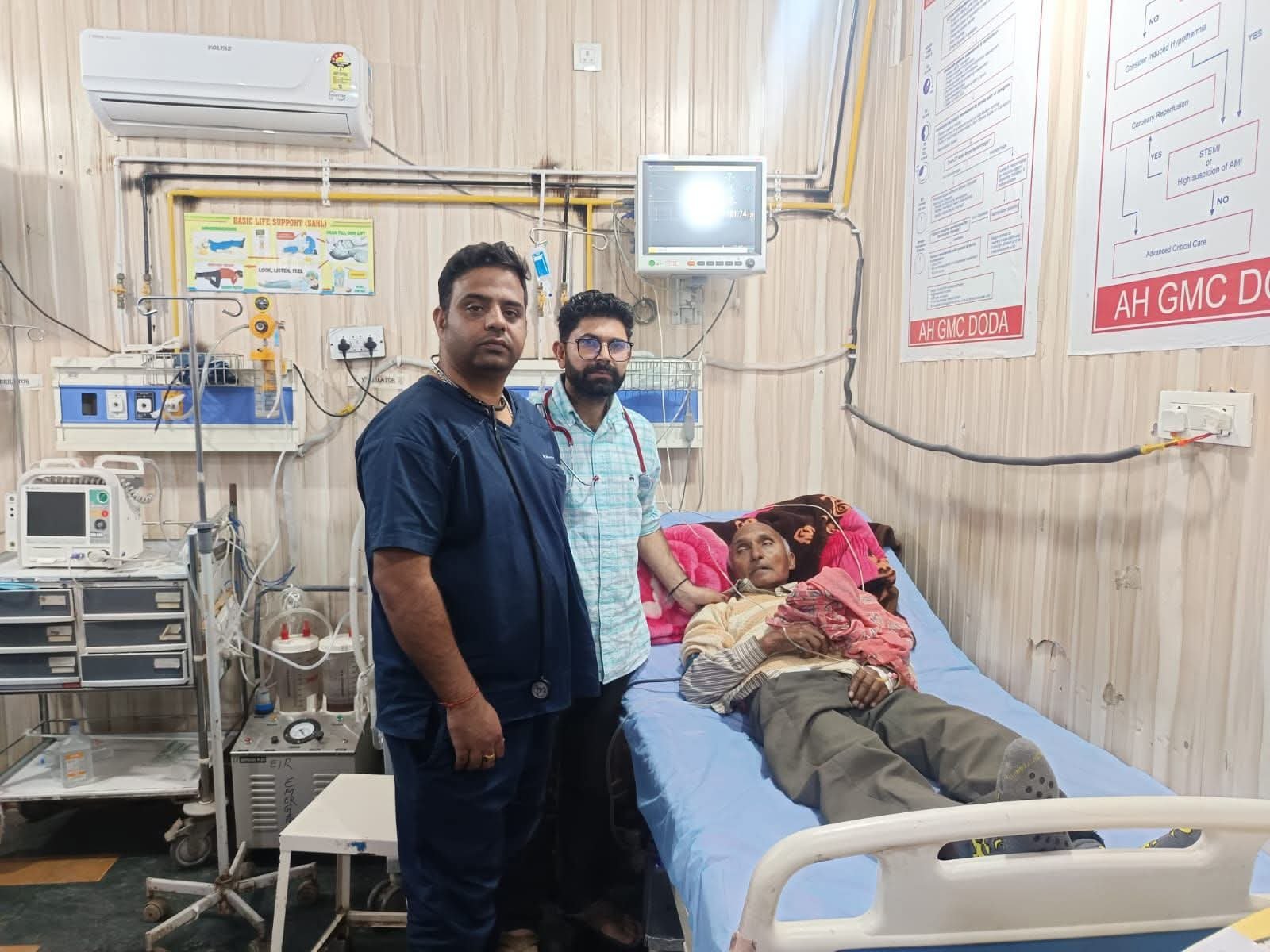
Doda, Nov 2: In a groundbreaking advancement for the Chenab Valley, the Government Medical College (GMC) Doda has successfully conducted its first-ever thrombolysis procedure on a stroke patient. This landmark achievement signifies a pivotal transformation in the district’s emergency healthcare services.
The thrombolysis procedure occurred under the leadership of Principal Dr. Rakesh Bahl and Head of the Department of Medicine Dr. Amir Hussain Parray. This marks the inaugural administration of such an advanced and time-sensitive treatment locally, which could greatly enhance patient outcomes.
The patient, Roshan Lal, a resident of Dolli village in Gundna tehsil, exhibited classic symptoms of a stroke upon arrival at GMC Doda. He received prompt evaluation and treatment from the dedicated Medicine Department team, including Dr. Govinder Kumar (MD Medicine), Dr. Divyanshu (Resident Doctor), and Dr. Momin (Intern). The execution of the procedure benefitted from the robust technical and logistical support of Mr. Rajinder Singh, Mr. Arif Mir, and the nursing staff.
Medical professionals confirmed that Roshan Lal responded remarkably well to the thrombolytic therapy and is currently on the path to recovery. Previously, stroke patients in the Doda region often faced dire prospects due to delayed transfers to GMC Jammu or other high-level facilities.
This newly established capacity at GMC Doda means stroke patients can now benefit from efficient, world-class management within their own district, significantly reducing the critical time lost during transportation.
Dr. Bahl praised the medical team, stating, “This accomplishment represents not only a remarkable achievement for GMC Doda but also a reassurance for thousands in remote areas who can now access advanced medical treatment without unnecessary delay.”
Dr. Parray emphasized the broader impact of this development, commenting, “Our success with thrombolysis demonstrates our team’s growing expertise in emergency medicine. It is a significant medical milestone and a beacon of hope for the entire Chenab region.”
The community’s response has been overwhelmingly positive, reflecting a collective appreciation for the strides made toward enhancing rural healthcare infrastructure. This development is crucial as it aligns with the pressing need to provide timely intervention during the golden hour post-stroke onset, ultimately saving lives.