



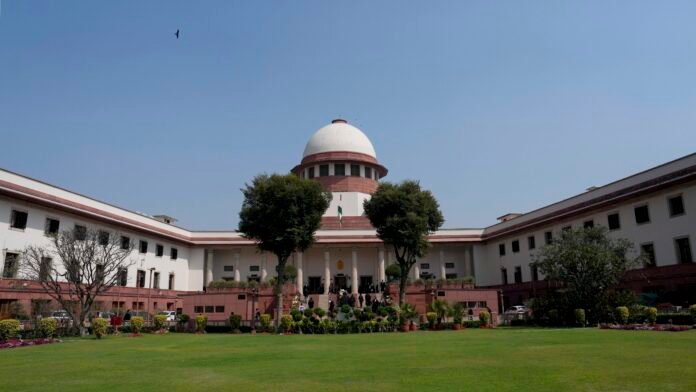
The Supreme Court of India has raised concerns about a disturbing trend where judges issue numerous orders just before their retirement. Chief Justice of India (CJI) Justice Surya Kant likened this behavior to a batter ‘hitting sixes in the final overs’ of a cricket match. The comments came during a hearing related to a Principal District and Sessions Judge from Madhya Pradesh, who challenged his suspension just ten days before retirement.
The CJI described this practice as ‘unfortunate’, stating, ‘There is a growing tendency of judges passing so many orders just before retirement.’ He further emphasized, ‘Petitioner, just before retirement, started hitting sixes.’ This remark highlighted the Court’s frustration with the manner in which some judicial officers behave close to the end of their terms.
The Bench included Justices Joymalya Bagchi and Vipul M. Pancholi, who were also engaged in the proceedings.
The judicial officer under scrutiny was set to retire on November 30 but faced suspension on November 19. This decision stemmed from two judicial orders he issued shortly before his retirement. Senior advocate Vipin Sanghi, representing the petitioner, defended his client, arguing that his long-standing unblemished service record and high performance ratings in his Annual Confidential Reports (ACRs) called the suspension into question.
During the proceedings, Sanghi posed a critical question: ‘How can an officer be suspended for judicial orders which are appealable and can be corrected by higher courts?’ His argument underscored the procedural complexities involved in disciplinary actions against judges.
The Supreme Court generally does not initiate disciplinary proceedings for judicial errors unless there is clear misconduct. The CJI queried, ‘But what if the orders are palpably dishonest?’ This distinction between an honest judicial misstep and actionable misconduct created a nuanced discussion. The Court also observed that, as of November 20, the Madhya Pradesh Government had extended the retirement age for judicial officers from 60 to 61 years. Additionally, this extension means that the petitioner would now retire on November 30, 2026, which caught the officer off guard when he issued the contested orders.
The Bench scrutinized why the officer did not approach the High Court regarding his suspension. Sanghi clarified that since the suspension involved a Full Court decision, the petitioner believed it prudent to appeal directly to the Supreme Court.
However, the Bench noted that in judicial history, High Court decisions have occasionally overturned Full Court resolutions. The Supreme Court also criticized the officer for seeking information regarding his suspension through the Right to Information (RTI) Act, stating, ‘It is not expected of a senior judicial officer to resort to the RTI route. He could have submitted a representation.’
The Supreme Court ultimately declined to grant the relief sought by the petitioner but allowed him the opportunity to submit a formal representation to the Madhya Pradesh High Court to seek the recall of his suspension. The Bench mandated that the High Court address this representation in a timely manner, highlighting the importance of upholding judicial procedures.