



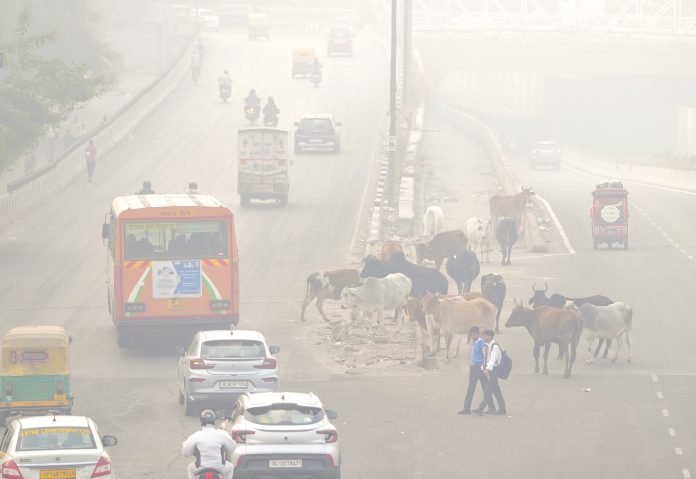
On Saturday, Delhi’s air quality plummeted to alarming levels, with the Air Quality Index (AQI) hitting a concerning 360, marking it as “very poor” according to the latest report from the Central Pollution Control Board (CPCB). This marks another day where the capital’s residents find themselves grappling with toxic air, raising health concerns among various demographics.
The AQI serves as a crucial indicator to gauge air conditions. According to the CPCB’s classifications, an AQI of 0–50 is deemed good, 51–100 satisfactory, 101–200 moderate, 201–300 poor, and anything above 300 is classified as very poor. This latest measurement starkly illustrates the ongoing crisis in Delhi’s air quality.
Amidst this environmental dilemma, the India Meteorological Department (IMD) reported a minimum temperature of 11.8°C in the city. Fog blanketed parts of Delhi, further exacerbating the visibility issues and contributing to the air pollution woes. The IMD has forecasted that the maximum temperature will hover around 28.2°C during the day, providing minimal respite from the ongoing crisis.
The relative humidity was reportedly at an eye-watering 100 percent at 8:30 a.m., indicating dense moisture-laden conditions. These conditions not only diminish visibility but also serve to intensify existing pollution levels.
Health experts urge the public to take precautionary measures, especially those with pre-existing medical conditions. “Children, the elderly, and individuals with respiratory issues need to minimize outdoor activities, particularly during peak pollution times,” said Dr. Asha Verma, a leading environmental health researcher.
The persistent air quality issues have led to increased calls for action and intervention from local authorities. Environmental activists have mounted pressure on the government to implement stricter regulations regarding vehicular emissions and industrial discharges contributing to the particulate matter in the air.
Delhi residents can expect no immediate relief from the hazardous conditions. While authorities continue to monitor the situation, immediate actions are essential to combat the rising pollution levels and protect public health. With hazardous measures steadily becoming the norm, the struggle against air pollution in the capital remains ongoing.