



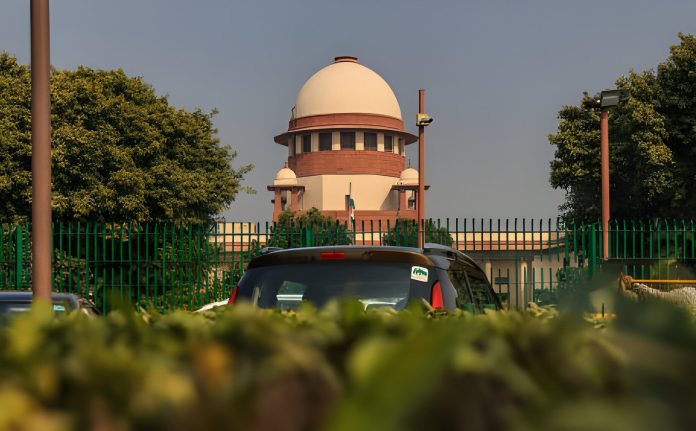
The Supreme Court on Wednesday referred to a three-judge bench the question of whether litigants can directly approach high courts for anticipatory bail or must mandatorily move the sessions court first.
A bench of Justices Vikram Nath and Sandeep Mehta said the matter should be listed before a larger bench once it is constituted. “This matter requires to be heard by a three-judge bench,” the court observed.
Earlier, the apex court had appointed senior advocate Siddharth Luthra as amicus curiae to assist in the issue.
Kerala HC Practice Under Scanner
The Supreme Court had on September 8 expressed concern over the “regular practice” of the Kerala High Court entertaining anticipatory bail applications directly, without litigants approaching the sessions court.
“One issue that is bothering us is that in the Kerala High Court, anticipatory bail applications are regularly entertained directly. Why is that so?” the bench had asked.
Referring to provisions in the old Code of Criminal Procedure and the new Bharatiya Nagarik Suraksha Sanhita (BNSS), 2023, the court noted that a clear hierarchy exists for bail applications. Section 482 of BNSS deals with directions for grant of bail to persons apprehending arrest.
“It doesn’t happen in any other state. Only in the Kerala High Court… applications for anticipatory bail are regularly entertained directly,” the bench observed.
Case That Triggered the Discussion
The observations came while hearing a plea filed by two men challenging a Kerala High Court order denying them anticipatory bail. The petitioners had approached the high court directly without first seeking relief from the sessions court.
The Supreme Court remarked that such a practice may deprive courts of proper factual records that would typically be placed before a sessions court.
“We are inclined to consider whether the option to approach the high court is a matter of choice for the accused or whether it should be mandatory to first go to the sessions court,” the bench said.
The top court had also issued notice to the Kerala High Court, through its Registrar General, seeking its response on the issue.