



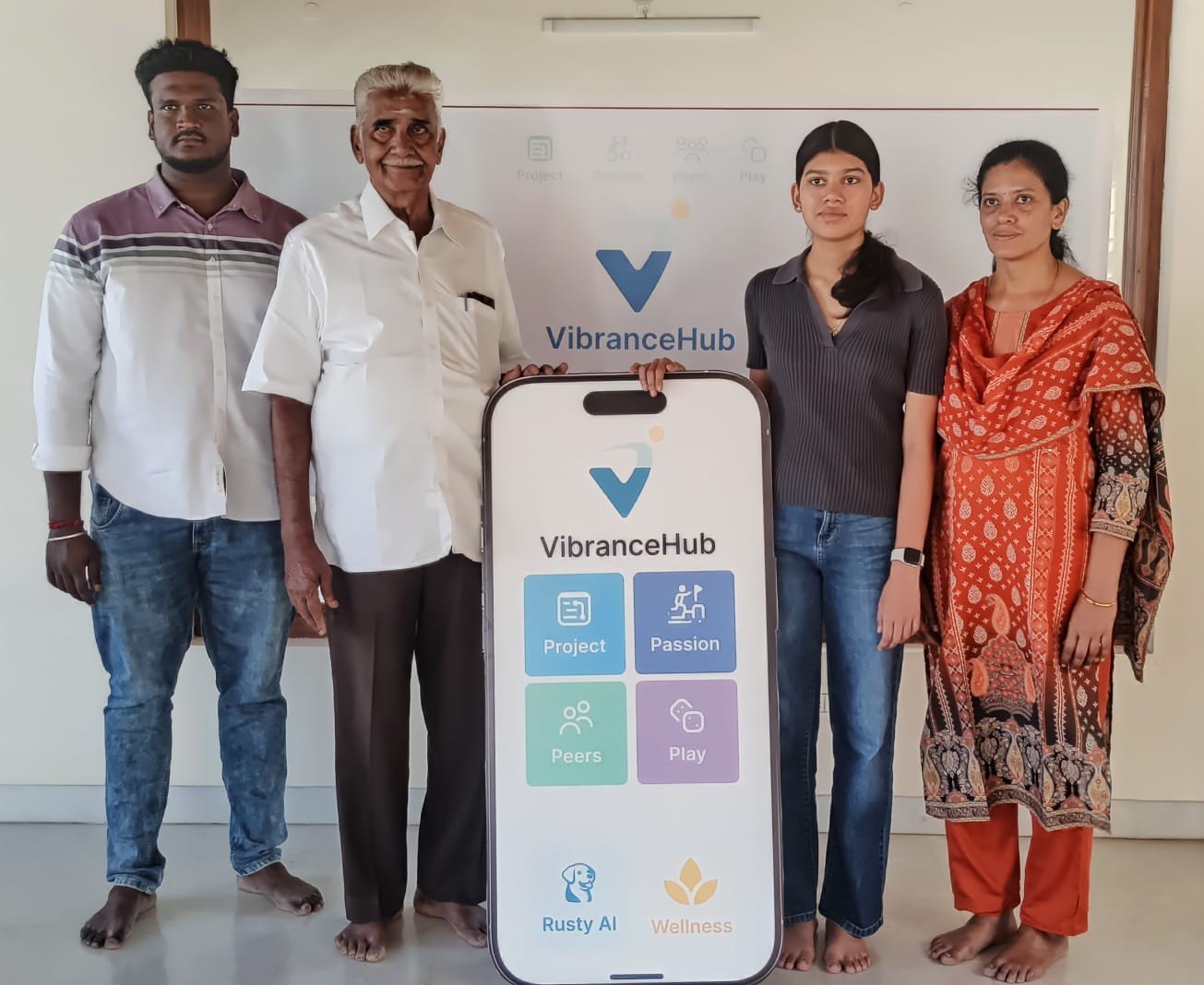
COIMBATORE — Rithanya Sivaram, a Class 12 student at The Indian Public School, has launched Vibrance Hub, a groundbreaking platform designed to seamlessly integrate project-based learning with wellbeing support. This initiative addresses a pivotal gap in India’s education system as students prepare for an AI-dominated future that values creativity and sustained innovation over rote knowledge.
“In the age of AI, information is commoditized. What matters now is what you can make, how you think, and whether you can sustain creative work over time,” says Sivaram. This sentiment underscores the need for educational reform. “Atal Tinkering Labs has provided the tools and space for students to innovate on a national level. Vibrance Hub offers the scaffolding, community, and wellbeing practices needed to transform interest into sustained making,” she adds.
Vibrance Hub draws inspiration from MIT’s Lifelong Kindergarten framework, which emphasizes Passion, Projects, Peers, and Play. It understands that maker education is not just about constructing items; it nurtures computational thinking, resilience through iteration, and collaborative skills—capabilities that artificial intelligence cannot replicate.
Children initially engage with challenges through fearless experimentation. However, pervasive standardized testing and an emphasis on ‘correct answers’ gradually diminish their confidence. The intrinsic creativity that flows naturally in youth often fades away, buried under layers of practicality and perfectionism. Many youths end up convincing themselves they’re simply not creative individuals.
In many ways, Vibrance Hub symbolizes a return to India’s educational roots. Prior to the colonial imposition of Macaulay’s infamous Minute on Education in February 1835, India thrived on a gurukul tradition that fostered learning through doing. Students learned subjects like metallurgy by actively forging, astronomy through observation, and medicine by practicing, rather than passively consuming knowledge.
The National Education Policy (NEP) 2020 explicitly calls for a revival of this maker-centric approach. It recognizes that India’s future prosperity hinges on developing creators and innovators, rather than mere information repeaters.
The Atal Innovation Mission (AIM), launched in 2016 by NITI Aayog, extends India’s commitment to a maker-centric educational philosophy at scale. AIM aligns with NEP 2020’s objective of fostering creativity and innovation by establishing robust infrastructure for hands-on learning across the nation.
Rithanya Sivaram’s Vibrance Hub stands as a promising step towards bridging the divide between traditional education and the demands of the modern world. By prioritizing creativity, collaboration, and well-being, it paves the way for a new generation poised to thrive in an evolving landscape dictated by artificial intelligence.